


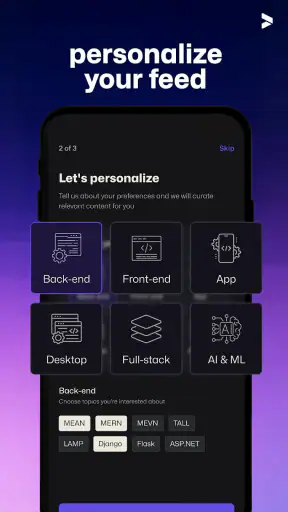
Keeping up with programming and artificial intelligence news is easy in theory and surprisingly difficult in daily life. I often open a general news app intending to find developer-focused stories, then end up sorting through unrelated headlines. DevBytes-For Busy Developers takes a narrower approach: it is a free News & Magazines app from DevBytes: Tech, AI and Coding news, built around technology, coding, and AI coverage for people who want a quicker route to that subject matter.
After spending time with it, my impression is that its biggest strength is focus. It feels more useful when I treat it as a reading checkpoint rather than as my only source of information. The app is aimed at readers who want to scan the developer world during a commute, between meetings, or while waiting for a build to finish. It is less suitable for someone looking for a broad newspaper replacement, a deep research database, or a highly personalized social news feed.
The important distinction is trust through visible choice, not blind confidence. DevBytes can help organize a busy reading habit, but I still recommend paying attention to what the app visibly asks for, how it handles account decisions, and whether its reading experience gives you enough control over what you consume.
What the focused news experience feels like
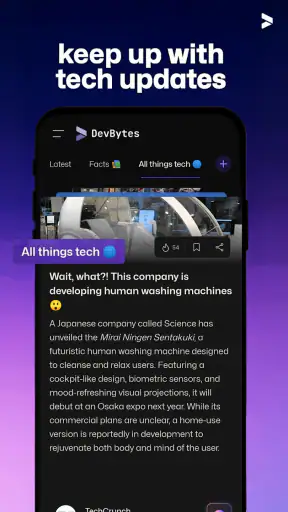
The app’s identity is clear from the first use: it is not trying to cover every possible news category. Its store short description is simply DevBytes, while its longer positioning centers on technology, coding, and AI news for developers in the United States. That focus makes it easier for me to decide whether opening it is worthwhile. If I want developer news, I do not have to begin by filtering out sports, entertainment, or general lifestyle stories.
That narrow subject range also creates a useful habit. Instead of treating every headline as something I must read immediately, I can use the app as a morning scan. I look for stories connected to tools I use, changes in the AI space, programming discussions, and broader technology developments that may affect my work. The practical benefit is not that every item becomes essential; it is that the app reduces the effort needed to find potentially relevant material.
In a realistic weekday scenario, I might open DevBytes before starting work, spend a few minutes checking the technology headlines, and then leave the app once I have identified one or two articles worth reading later. That workflow is healthier than allowing a general-purpose feed to keep me scrolling. The app works best when I give it a defined job: help me notice what is happening, not replace careful reading or independent verification.
Its audience is therefore fairly specific. A student learning software development, a programmer who wants a lightweight news check, or an AI enthusiast who prefers a dedicated topic area may find the format convenient. A casual reader who wants local reporting, politics, business, culture, and technology together will probably feel constrained. For that person, a broad news reader or newspaper app is likely the better everyday choice.
Why the category focus matters
Many news apps compete through volume. They present a large stream and expect the reader to personalize it. DevBytes takes the opposite route by making the subject itself the starting point. That can be valuable for busy developers because the main filtering decision has already been made: the app is about the technical world rather than general current events.
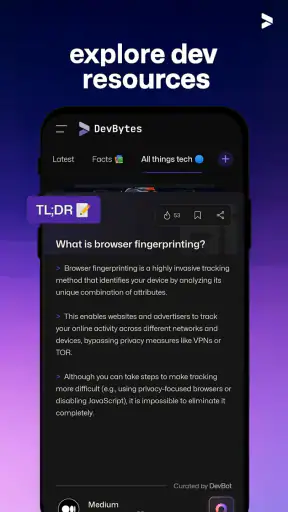
The trade-off is that subject focus does not automatically guarantee depth. A headline can be relevant without being enough for a technical decision. I would not use a short news item here as the sole basis for selecting a framework, changing a production workflow, evaluating an AI service, or interpreting a security issue. For those decisions, I would follow the story to its original source, read technical documentation, and compare more than one account.
This is also where DevBytes differs from a dedicated RSS reader. An RSS tool gives me direct control over the publications and feeds I choose, but it takes time to configure and maintain. DevBytes offers a more immediate starting point for someone who wants a ready-made developer-news destination. In exchange, I have less control over the exact source mix and the order in which stories appear. Readers who enjoy building their own information system may prefer RSS; readers who want less setup may prefer this app.
Small workflow choices that improve the experience
I find it useful to separate discovery from study. During a quick session, I scan headlines and note which topics deserve attention. Later, I open the most relevant stories when I have enough time to understand them. This prevents the common mistake of treating a fast feed as if it were a complete technical briefing.
A second helpful approach is to use topic relevance as a prompt for questions. When I see an AI story, I ask whether it concerns a tool I actually use, a change that affects my work, or merely a trend I want to understand. When I see a coding story, I consider whether it offers a practical technique or just a discussion point. This simple filter keeps the app from turning into passive consumption.
A third trade-off involves freshness versus confidence. Technology news can move quickly, especially around AI, but speed often means that early reporting needs context. I would treat a new headline as a signal to investigate, not as a final answer. That is particularly important when an article could influence spending, architecture, privacy decisions, or professional advice.
Trust, permissions, and what I can responsibly judge
When I review a news app, I do not assume that a clean interface tells me everything about data handling. I look for the choices presented during use: whether an account is requested, whether sign-in is optional or necessary for the parts I want, and whether the app makes its settings understandable. These details matter because reading habits can reveal a great deal about a person’s interests.
DevBytes is free, which lowers the barrier to trying it, but free access should not make me careless about privacy decisions. I would inspect the permission prompts shown on my device and decline anything that does not make sense for a reading app. I would also review the app’s privacy information and account controls before creating an account or sharing personal details. Those are practical checks, not accusations, and they help me keep control of the relationship.
I do not treat the developer name, DevBytes: Tech, AI and Coding news, as a substitute for examining the app’s visible behavior. A developer’s identity can help me recognize the product, but trust is built through clear explanations, sensible requests, and the ability to change my mind later. If an app makes a choice difficult to understand, I pause rather than accepting it automatically.
The same caution applies to notifications. For a news reader, alerts can be useful when they point me toward an important development, but they can also fragment my attention. I prefer to decide whether notifications are genuinely helpful after trying the basic reading experience. If alerts become a source of interruption, turning them off is one of the first controls I would look for.
Data-sensitive moments in everyday use
The most sensitive moments are not limited to installation. They can occur when an app asks for sign-in, when I interact with a story, when I save or share content, or when I allow notifications. Each action may create a different privacy consideration, so I avoid giving blanket approval without understanding the purpose.
For example, reading a headline is a different activity from sharing it with a work group. A shared article may reveal my interests to colleagues, while a saved item may become part of a longer-term profile if the service associates it with an account. I therefore use sharing deliberately and avoid assuming that a personal reading choice is invisible simply because it feels casual.
On a shared phone or tablet, I would be especially careful with account controls and notification previews. A headline about a sensitive technical project, employer, or personal interest can appear on a lock screen. Managing previews at the operating-system level is a small step, but it gives me more control than relying only on the app’s default behavior.
Another practical safeguard is to avoid entering confidential work information into any feedback, search, or account field unless I understand exactly where it goes. News apps are for reading and discovery; they are not the place for private project details, credentials, internal links, or proprietary code. This may sound obvious, but busy users often type quickly when an app offers a search or feedback box.
Account control and user agency
I value apps that let me use their core purpose without forcing unnecessary commitment. With a news app, I want to know whether I can browse first, whether an account is required for basic reading, and whether I can later remove access or stop using the service without friction. Those questions affect how comfortable I feel recommending it to a friend.
My advice is to start with the smallest commitment possible. Install the app, examine the first-run choices, and decide whether the reading experience is useful before adding personal information. If an account is offered for convenience, consider whether that convenience is worth the information and ongoing access involved. The right answer depends on the controls shown to you and your own privacy priorities.
I would also check the device settings after installation rather than assuming the initial configuration is ideal. Review notifications, network-related permissions if presented, and any account access options that appear. If the app offers a way to manage or delete an account, note where that control lives before you need it. Knowing the exit route is part of making an informed choice.
These checks do not make the app difficult to use; they make the user an active participant. DevBytes is most comfortable for me when I decide how often to open it, whether it can interrupt me, and how much personal information I am willing to connect to the experience. That mindset is useful for any news service, especially one that may become part of a daily routine.
Performance expectations and compatibility
DevBytes is free and marked for Everyone, so it is approachable for a wide audience. It was released on March 21, 2022, and the current version is 7.1.5. It requires Android 6.0 or later, which means people using older devices should check compatibility before planning around it. These details are more practical than they may first appear: a news app is only useful if it runs comfortably on the phone you actually carry.
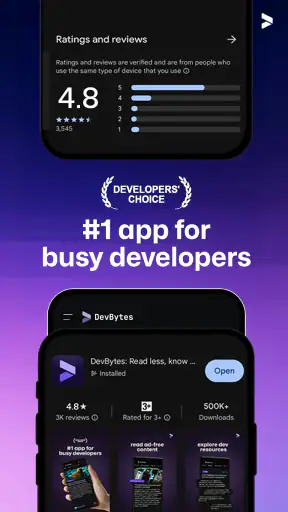
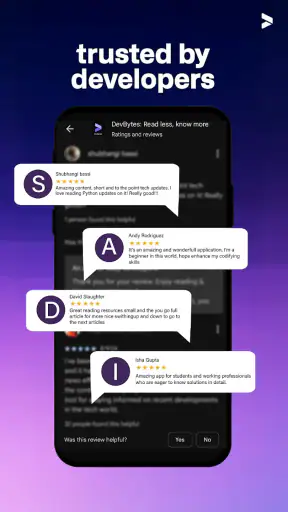
The app has reached over five million installs and holds a 4.5 average from around nineteen thousand ratings. I see that as a sign that many people find the basic proposition worthwhile, but I would not treat popularity as proof that it matches every reader’s needs. Ratings compress many different experiences into one number. My own decision would still depend on the app’s controls, source relevance, reading comfort, and behavior on my device.
The number of ratings also tells me that DevBytes is not an obscure experiment with no established audience. Even so, an active user base does not answer the questions that matter most to an individual: whether the topics are relevant, whether the app fits a preferred reading routine, and whether its privacy choices feel acceptable. Those are personal tests that a store score cannot replace.
Who should use it, and who should skip it
I would recommend trying DevBytes if you want a dedicated place for coding, AI, and technology headlines without configuring a collection of feeds yourself. It makes particular sense for readers who have limited time and want a quick subject-specific scan before deciding what deserves deeper attention.
It may also suit learners who are trying to understand the wider developer conversation. Following technology news can expose a student to tools, debates, and industry changes that do not appear in a course syllabus. I would still pair it with structured learning resources, documentation, and hands-on practice. News can provide context, but it cannot substitute for building and testing things.
I would skip it if your main need is comprehensive general news, local reporting, long-form investigative journalism, or a fully controlled publication list. In those situations, a newspaper app, a general aggregator, or an RSS reader may offer a better match. I would also skip it as a primary research source for high-stakes technical or business decisions. Its role is discovery and orientation, not final verification.
Readers who dislike frequent topic changes may need to be disciplined. Developer news can move from programming techniques to AI announcements to broader technology stories in a short session. If that variety makes it harder for you to concentrate, a carefully selected newsletter or a small RSS collection could create a calmer reading environment.
My cautious verdict
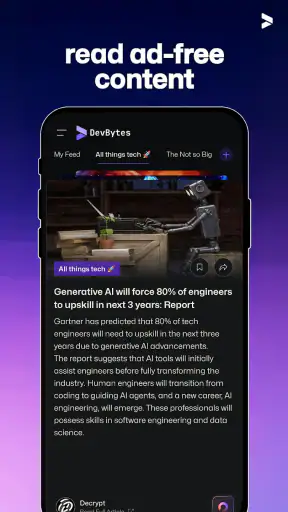
DevBytes-For Busy Developers is a sensible free option for people who want a focused technology-news habit. I like its clear subject area and the way it can turn a few spare minutes into a useful scan. Its greatest value is convenience: it gives developers and AI-interested readers a dedicated starting point instead of asking them to search the entire news world each time.
My recommendation comes with boundaries. I would use it to discover stories, then check original sources before trusting important claims. I would review permissions and privacy choices rather than assuming that free access explains everything. I would keep notifications under control, avoid sharing sensitive work details, and use the app without creating an account unless the benefits and controls are clear to me.
The app is a good fit when you want speed, focus, and a low-commitment way to stay aware of developer topics. It is not the right tool when you need complete editorial control, broad news coverage, or authoritative technical research. With those expectations in place, DevBytes earns a place in my reading rotation—not as the final word on technology, but as a practical first look that I can use on my own terms.


